What Training Providers Need to Know About House Enrolled Act 1275
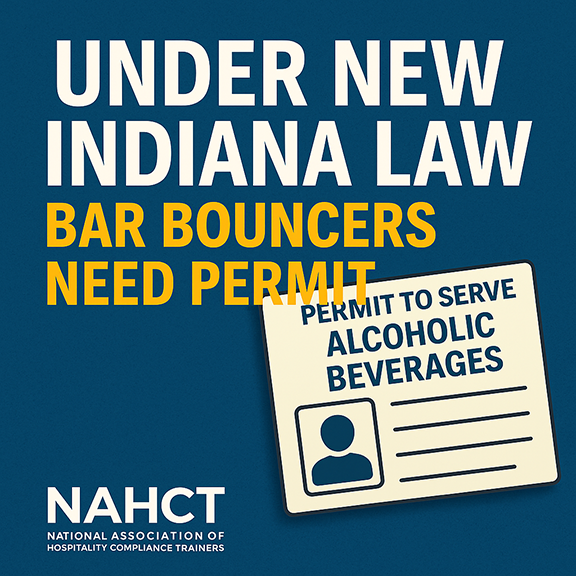
Effective July 1, 2025, a new law in Indiana—House Enrolled Act 1275—has redefined who qualifies as an “alcohol server” in the state. While bartenders, servers, clerks, and other alcohol-handling staff have long been required to complete approved alcohol server training and obtain an employee permit, this new legislation extends the same requirement to bar bouncers who check IDs at the door.
What Changed?
The key change under HEA 1275 is that any employee responsible for verifying age or identification before allowing entry or service of alcohol is now legally required to:
- Complete an Indiana-approved Alcohol Server Training course, and
- Obtain an Indiana Employee Permit through the Indiana Alcohol & Tobacco Commission (ATC).
This includes bouncers, doormen, security staff, or any other individual checking IDs at bars, clubs, or venues where alcohol is served.
Why This Matters for Training Providers
For training providers offering alcohol server certification in Indiana, this legislation creates a clear opportunity—and a responsibility.
1. Expand Your Target Audience
Historically, most training outreach has focused on bartenders, waitstaff, and clerks. Now, training providers must also include bouncers and venue security staff in their education and marketing efforts.
Many of these workers may not realize they’re now required to hold a valid permit, especially if they’ve never served or sold alcohol directly.
2. Clarify Compliance for Employers
Venue owners and managers may assume their security team is exempt. As training providers, we must help educate employers about the expanded definition and assist them in remaining compliant by training all covered roles—not just traditional service staff.
Providing printable compliance guides or employer toolkits could help reduce violations and build trust with new clients.
3. Update Your Materials
Make sure your course content, promotional language, and FAQ sections reflect the current law. Consider adding examples like “bouncer,” “ID checker,” or “door staff” when listing who needs certification.
Enforcement and Penalties
Though details about enforcement are still emerging, failure to comply with the updated definition could result in penalties for both the employee and the license holder. Training providers should emphasize this risk to encourage prompt compliance.
Final Thoughts
Indiana’s HEA 1275 represents a growing national trend: tightening regulations around age verification and alcohol access. As compliance professionals, it’s our role to help businesses stay ahead of the curve—not only through effective training but by being proactive messengers of legislative change.
Let’s continue supporting the hospitality industry with clarity, quality education, and practical compliance tools.
—
National Association of Hospitality Compliance Trainers (NAHCT)
www.nahct.org
Training Providers United for Smarter Compliance
The information presented in this blog was prepared by the National Association of Hospitality Compliance Trainers (NAHCT) as a summary to assist training providers in staying informed about compliance updates. While every effort has been made to provide accurate information, NAHCT is not responsible for any errors, omissions, or misinterpretations. Each training provider is responsible for reviewing the official statutes, regulations, and guidance from the appropriate regulatory authority to ensure their curriculum is accurate and compliant.